How to help kids with dyslexia and dysgraphia


Learning to read and write is an exciting milestone for many children, but for those with dyslexia or dysgraphia, it can also be one of the most challenging parts of their learning journey.
If your child finds reading, spelling, handwriting, or putting their ideas onto paper difficult, you're not alone. Dyslexia and dysgraphia are among the most common learning differences affecting children, and with the right support, they can become confident readers and writers.
The good news is that children with these learning differences are just as capable of being creative and successful as their peers. They simply learn differently. By understanding how dyslexia and dysgraphia affect learning, and by providing the right strategies, tools, and encouragement, you can help your child develop essential skills while protecting something equally important - their confidence.
In this blog, we'll explain the differences between dyslexia and dysgraphia, discuss diagnosis and management, explore the emotional impact these learning differences can have, and share practical ways you can support your child both at home and through engaging learning programs like Night Zookeeper.
What is dyslexia?
Dyslexia is a condition which causes impaired reading and difficulty processing written language. Dyslexia is directly linked to how the brain processes information.
According to the International Dyslexia Association, there are many contributing factors, but essentially, a child with dyslexia in primary/elementary school has particular difficulty learning to read, write and spell. Children with dyslexia may:
- Read more slowly than their peers.
- Find it difficult to sound out unfamiliar words.
- Mix up similar-looking letters.
- Have trouble remembering spelling patterns.
- Avoid reading because it feels frustrating.
- Become tired quickly during literacy activities.
- Understand spoken language much better than written text.
Although reading may require more effort, many children with dyslexia demonstrate exceptional strengths in creativity, storytelling, problem-solving, visual thinking, and innovation.
Diagnosing dyslexia
A diagnosis typically involves a comprehensive educational assessment completed by qualified professionals such as educational psychologists or specialist teachers. It involves a combination of assessments, including reading tests, phonics evaluations, and cognitive assessments.
Early identification is important because research consistently shows that early intervention leads to better literacy outcomes.
Parents should speak with their child's teacher if they notice ongoing struggles with reading, spelling, or written work.
Management of dyslexia
There are many evidence-based teaching methods that have been proven to significantly improve reading and writing skills. Managing dyslexia also requires a comprehensive approach.
- Structured literacy instruction: Research strongly supports systematic, explicit phonics instruction that teaches children how sounds relate to letters. This introduces language arts skills gradually, allowing children to build confidence through repeated success.
- Multisensory learning: Many children with dyslexia learn best when multiple senses are involved. Activities could involve tracing letters in sand, using letter magnets, saying sounds aloud, or using movement during learning. These techniques help strengthen neural pathways involved in reading.
- Assistive technology: technology can remove unnecessary barriers while children continue building reading and writing skills. Tools like text to speech/speech to text extensions, audiobooks, predictive spelling, and dyslexia freindly fonts allow kids to focus on understanding ideas rather than struggling with decoding words.
- Regular reading practice: daily reading (even just 10-15 minutes) can help strengthen fluency over time, and make reading seem less daunting. Reading aloud and discussing stories after can help to make reading less stressful and more enjoyable.
What is dysgraphia?
While dyslexia mainly affects reading, dysgraphia affects written expression.
According to the International Dyslexia Association, dysgraphia is a learning disorder that affects writing skills, making it difficult for a child to learn to spell words or write quickly. Often, dysgraphia (a condition which causes impaired handwriting and spelling) can be paired with dyslexia.
Children with dysgraphia might struggle to organize their thoughts on paper, leading to frustration and a dislike for writing tasks.
Children with dysgraphia often know exactly what they want to say but struggle to get those ideas onto paper.
They might:
- have messy or inconsistent handwriting
- tire quickly while writing
- struggle to hold a pencil comfortably
- write very slowly
- leave out letters or words
- have difficulty organizing written work
- become frustrated during writing assignments
Because writing feels physically demanding, children with dysgraphia sometimes avoid creative writing altogether (even when they have wonderful imaginations).
Diagnosis, testing & management of dysgraphia
Diagnosing dysgraphia typically involves formalized handwriting assessments. These tests evaluate a child's ability to write legibly, spell correctly, and compose coherent sentences. It's important to consider the timing of these assessments. Early intervention is key, so if you notice your child struggling with writing in the early years of school, it might be worth consulting with a professional.
However, it's essential to note that current diagnostic tools have limitations. They might not capture all aspects of dysgraphia, such as the emotional impact or the child's creative potential. Therefore, a comprehensive approach that includes observation and feedback from teachers and parents is crucial.
Management of dysgraphia
Children with dysgraphia benefit from explicit instruction and accommodations that reduce the physical demands of writing while strengthening underlying skills. Here are some strategies that can help manage dysgraphia:
- Build fine motor skills: activities such as cutting with child-safe scissors, threading beads, using tweezers, tracing shapes, or playing with modeling clay can improve hand strength and pencil control.
- Teach writing step by step: instead of expecting children to write an entire story immediately, break writing into manageable stages like brainstorming, drawing, planning, starting with simple sentences and then gradually expanding, and editing together. Small steps can gradually build confidence.
- Use technology: typing often feels easier than handwriting because it removes much of the physical effort involved. Speech to text software can also help children express ideas without becoming overwhelmed by handwriting.
- Practice little and often: rather than lengthy handwriting sessions, aim for short, regular practice. Five to ten focused minutes each day is usually more productive than one long writing session that leads to fatigue.
Emotional and self-esteem considerations
Although dyslexia and dysgraphia affect literacy skills, their impact often extends much further.
Repeated struggles with reading and writing can influence how children view themselves as learners.
A child who repeatedly hears corrections, sees classmates finish first, or receives lower marks despite trying their hardest may begin believing they simply "aren't good at school."
Unfortunately, this can lead to anxiety, frustration, and reduced confidence long before academic progress becomes the biggest concern.
Research from the British Dyslexia Association suggests that many children with dyslexia experience lower self-esteem because they compare themselves to classmates and begin attributing academic struggles to their own abilities rather than their learning difference.
Children with dyslexia and/or dysgraphia may experience:
- anxiety before literacy lessons
- frustration when ideas don't match what appears on paper
- embarrassment reading aloud
- perfectionism
- avoidance of homework
- fear of making mistakes
- reluctance to write creatively
- reduced motivation
- negative self-talk such as "I am not clever" or "I can't do this."
These feelings are completely understandable, but they don't have to define your child's educational journey.
Tips to help your child with dyslexia or dysgraphia at home
Typing vs handwriting
The act of writing (putting pent to paper) can be difficult for a child who experiences dysgraphia.
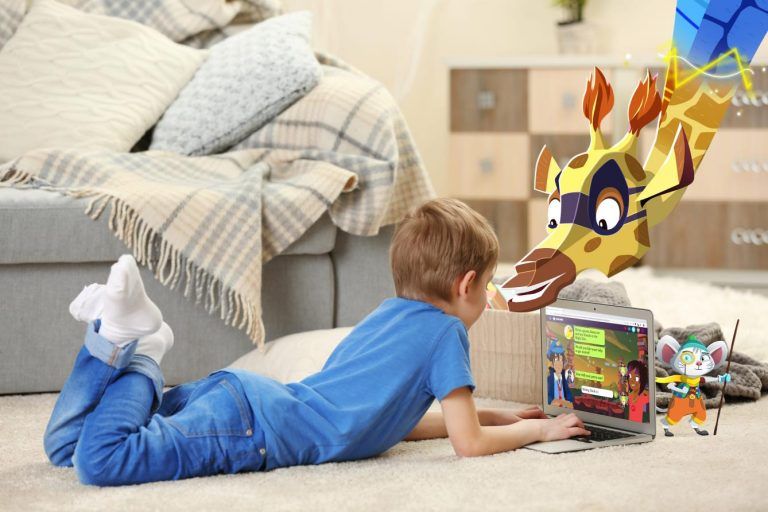
Handwriting involves more than putting ideas down on paper. Picking up a pen or pencil, holding it properly, and mastering handwriting skills all require the development of fine motor skills. For this reason, typing can be helpful for a child who struggles with dysgraphia.
Typing can still be hard for a child with dysgraphia in regards to finding letters and correctly spacing words. However, tools such as smart keyboards and software can now correct typos and errors, allowing children to focus on getting their ideas out without frustration.
Creativity first
Writing doesn’t always have to start with pen and paper. The key to good writing can start with mastering storytelling. Channeling your child's inner creativity and imagination can be one of the best places to start to get a child to want to take their ideas and eventually learn to properly write them down.
Try talking through these story ideas with your child!

Learning games
In nowadays, educational games present ways for children to learn how to write without actually physically writing. This is because, most of the time, children prefer to play digital games that require them to give their answer by dragging or tapping something on screen.
Games that have children simply “tap” to find an adjective, verb or correctly spelled word can be an easy way to promote learning (and spelling), without the difficulty of writing the words out.
Writing too daunting? Play verbal games!
Sometimes, if a child struggles with writing and reading, the mere thought of writing in any form may cause them to become resistant. Think of ways to get your child to start being creative in order to get them to be more confident in capturing their creativity in writing.
One classic verbal word game is, “I spy (with my little eye!)”. Verbal games are a really good option to kick-start their creativity and imagination. This game is appropriate for a broad age range. All you need for this game is your imagination!
You can also try these fun writing games in written, verbal or digital form!
Encourage drawing
Often, the desire to draw comes earlier than the desire to write. It is no secret that creative writing goes hand-in-hand with drawing.
Many children articulate their thoughts differently, and one way to start telling a story is by drawing it!
Give encouraging feedback, not criticism
While it's important to correct grammar and spelling to help strengthen your child’s writing, we recommend stepping beyond this in order to eventually guide your child back to it.
Take a moment to celebrate their creative ideas rather than the errors - if your child has created a blue striped Liominkey (half lion, half monkey) then by all means, embrace that animal!
Instead of pointing out mistakes in your child's work, try complimenting the imagination or creativity. Children who feel successful are far more willing to keep practising. Normalizing their mistakes alsoo reminds them that everyone makes mistakes while learning. ou can say something like 'oops, I spelled that wrong too', or 'I really struggled with that word too'.
Encouraging a growth mindset has been proven too encourage resilience when challenges arise. Psychologist Carol Dweck in Mindset: The New Psychology of Success shows that praising effort and strategies encourages children to view abilities as skills that improve through practice. Instead of saying 'You're a great writer', try 'look how much your writing has improved'!
Learning is two-fold in the sense that when creativity is fed, engagement will increase and with more work produced, the grammatical improvements will follow.
How Night Zookeeper can help
At Night Zookeeper, we strive to offer an inclusive learning program that can be adjusted to children's unique learning situations and current abilities, so that they feel supported and encouraged to progress!
There are many ways to adapt the program to suit your child's current learning needs, including:
Adjustable learning level & activities
Upon registering for an account, you'll have access to your very own parent dashboard. Here, you'll be able to manage your child's Night Zookeeper account, and make adjustments where needed.
To adjust the learning level linked to your child's profile, all you have to do is access their account settings, and scroll down to "difficulty level". With just two clicks, you'll be able to select their current learning level and save your changes - their account will be automatically updated so that they are presented with appropriate content that they will be able to complete. This fosters confidence and boosts their skills!
You will also be able to filter out activities if you're aware that your child struggles with a particular style of learning exercise. For example, you can filter out our lessons to start, and encourage your child to play through the educational games and challenges before moving on to more complex activities as they get used to the program.
You can read more about our program and curriculum in our user guide.
Audio captions
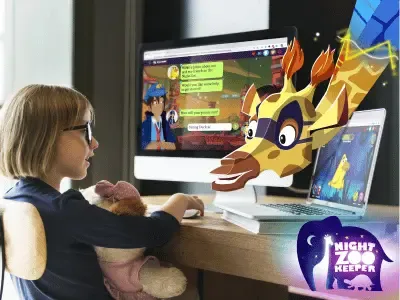
Night Zookeeper is equipped with audio captions that offer extra help with reading. All audio captions are accompanied by on-screen text, prompting children to read along as the audio plays.
Typing vs handwriting
As an online learning program, Night Zookeeper is predominantly typing-based, which children with dyslexia and dysgraphia tend to find a lot easier than handwriting.
As Liz, one of our Night Zookeeper parents whose child has dysgraphia points out,
“Often the act of handwriting is very difficult and painful so the effort that could be going into creative writing is going into the physical act of writing. Night Zookeeper has allowed my son to focus on the creative writing aspect of writing. He has also enjoyed the writing prompts and the creation of his own characters.”
- Liz, parent
Please note – for parents who are looking for extra handwriting practice, children can upload pictures of their handwriting to be reviewed by our tutoring team within our writing tool. In addition to this, you'll also receive monthly printable worksheets as part of your Night Zookeeper subscription, which are sent directly to your email inbox for handwriting practice!
Bite sized learning
Night Zookeeper focuses on teaching writing in manageable, bite size chunks, building on them, rather than offering a blank piece of paper with no prompts where many skills are needed to physically write.
If you want your child to focus on creative writing, it is best to isolate “creativity” first. Night Zookeeper gently introduces creativity by prompting children to think of, and draw, their own magical animal.
From there, we offer a chat functionality where your child can answer questions in order to build up to a larger piece of writing on the animal they've created. Before your child knows it, they’ve started writing a longer report!
As Sheridan, one of our Night Zookeeper parents whose child has dyslexia says,
“Overall, my son is proud of his Night Zookeeper family. He knows his characters and is motivated to develop them through the activities. He needs support to participate in it – therefore it’s something we share, but I can step up his level of direct participation slowly.”
- Sheridan, parent
Personalized tutoring
Once your child is happy with their work, their writing is submitted to our tutoring team for review. The tutors provide positive, personalized feedback to inspire creativity and imagination!
While we will provide grammatical and spelling corrections, the intention is to help your child build confidence, then improve on their writing skills. Children on Night Zookeeper really look forward to receiving tutoring feedback and providing the necessary edits to improve their writing.
Roxanne, a Night Zookeeper parent whose child has dyslexia, dyspraxia and autism says that the feedback has proven to be incredibly helpful. She wrote,
“I love that you guys give feedback. I’m also dyslexic so it helps me that you can give her feedback on her work.”
- Sheridan, parent
In addition to tutor feedback, children are also able to comment on each other's writing! Our tutoring team moderates all comments written by children on the program, cultivating a positive community of children who read each other’s writing and cheer other young learners on!
Please note that your child’s profile settings can be turned private in your parent dashboard settings.
Confidence building
At Night Zookeeper, we believe every child has a story to tell - and we’re here to help them tell it with confidence!
Our award-winning program is designed to nurture creativity and build self-assurance by celebrating children's progress. Night Zookeeper encourages them to learn at their own pace and without pressure, ensuring that they stay motivated and that they have fun while learning. With each achievement, they’ll unlock new parts of the Night Zoo and feel empowered by their success. Because when learning feels like an adventure, confidence follows!
Ready to make learning fantastically fun and easy for your child? Sign up today and get a FREE 7-day trial!
Got any questions about the program? Email us at [email protected]. Follow us on social media for extra tips and activities:


Make Reading & Writing Fantastically Fun!
- Award-winning reading & writing program for kids
- Improves spelling, grammar, punctuation & vocabulary
- Over 1,000 different learning games and activities


How Creative Writing Can Help Children with Anxiety


Why Gamification Helps Children with Special Educational Needs


How Night Zookeeper has Helped Children with ADHD