How to Homeschool and Work From Home


Working and schooling have changed massively in recent years, and we know how challenging working from home with kids can be - especially if you have no previous homeschooling experience!
If you’ve decided that homeschooling is the right choice for you and your family, you may not yet have found a plan that works for your lifestyle, especially if you’re working from home.
Balancing work responsibilities with your child’s education can come with plenty of challenges, but finding the right routines, resources, and expectations can make the experience much more manageable. In this article, we’ve compiled our best tips for combining working from home and homeschooling, from creating a realistic schedule to encouraging your child to become more independent.
In this article, we’ve compiled the best tips on how to combine working from home and homeschooling - we hope these help you find an effective way to tackle both!

1. Come up with a schedule and stick to a routine
For some of us, sticking to a set routine can feel monotonous and at times boring. However, it really does have a huge impact on how successfully you’ll be able to manage your work/homeschool day. Here are some tips on how to successfully organize your homeschool day in an attainable and realistic way:
- Familiarize yourself with your child’s school schedule, including dedicated time per subject and extracurricular activities.
- Create a routine that incorporates and merges your working day and your child’s school schedule.
- Be mindful of how long you normally spend on a single task and make time to ensure that everything is achieved. For example, if you know that your child takes around an hour to get ready for the day, be sure to start your morning routine over an hour before both you and your child are expected to start working/studying!
- Build in regular breaks for both you and your child.
- Leave some flexibility in your schedule for unexpected work commitments or changes to your child’s needs.
Your routine doesn’t need to be identical every day, either. A weekly plan can help you see which activities need to be completed while giving you the flexibility to move things around when necessary
2. Plan ahead
This piece of advice goes hand-in-hand with establishing a This piece of advice goes hand-in-hand with establishing a routine that works for your family. You should aim to plan as much as you can ahead of time. This includes day-to-day activities, meals, household chores, weekly shopping, appointments, and other events.
Planning your child’s learning activities in advance can also make a big difference. Having lessons, books, worksheets, or online activities ready to go means you don’t have to spend valuable work time figuring out what your child should do next. Meal prepping is another great way to save time during busy days. Even small amounts of preparation can help reduce the number of decisions you need to make when you’re trying to balance professional and homeschooling responsibilities.
Most importantly, planning ahead should make life easier rather than creating another source of pressure. Leave room for plans to change when they need to.
3. Share your workday/plans with the rest of the family
When you’re working from home and homeschooling simultaneously, it’s really important to share scheduled events with the whole family, in order to be prepared in advance. An example of this is a set work call or business meeting - if you know that you have a call at a specific time, you may want to let your family know and ask them to be mindful of this. This will set clear expectations and will allow you to avoid mishaps!

4. Establish designated work areas for all members of the family
We know that not all families are able to provide separate work areas for all members of the family. However, it’s a known fact that establishing work/study-specific areas can massively increase productivity and improve concentration. This can be a different room of your home for each family member (for example, office, living room and kitchen) or different areas within the same room that are set up to accommodate all members of the family (for example, separate desks, or separate devices).
5. Choose curriculum and resources that fit your lifestyle
One of the biggest challenges of homeschooling while working from home is finding educational resources that work for both your child and your schedule. Consider what type of curriculum best suits your family. Do you need structured lessons that your child can work through independently? Would a combination of books, hands-on activities, and online learning work better? Or do you prefer to have more flexibility from day to day?
It’s also worth considering how much preparation each resource requires from you. Resources that allow your child to work independently can be particularly useful when you have meetings, deadlines, or other work responsibilities to manage. The right resources should support your child’s learning without creating unnecessary pressure for you.
6. Encourage independence and group work
As a working parent, you won’t always be available to answer your child’s questions or offer help. This is why encouraging independence can be such an important part of homeschooling while working from home. Give your child opportunities to find answers, complete activities independently, and take ownership of their learning.
You could encourage them to:
- Try solving a problem themselves before asking for help.
- Look up information using age-appropriate search tools or reference books.
- Work through an activity independently.
- Keep track of the tasks they’ve completed.
- Choose between different learning activities.
- Share something new they’ve discovered with the rest of the family.
Group work can also be useful if your child has siblings, friends, or other homeschooling families they can learn with. Developing independence can benefit your child beyond homeschooling, while also giving you valuable periods of uninterrupted time to focus on your own work.
7. Rely on technology and new forms of learning
Technology can really be your best friend when you’re working from home with kids!
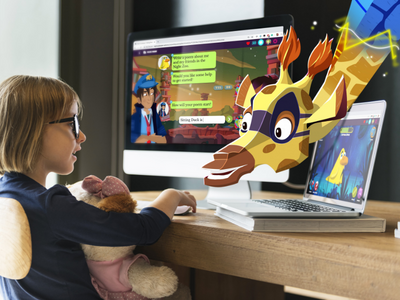
With new advancements in the educational technology (edtech) space, it’s now easier than ever to find engaging forms of learning that allow children to work more independently. Online learning programs can provide structured activities, lessons, and educational games that keep children engaged while helping them develop important skills.
Programs such as Night Zookeeper can be a fun way for children to develop their reading and writing skills while giving parents some valuable time to focus on work. The key is finding technology that complements your child’s education rather than simply using a screen to fill time.
8. Flexibility and keeping an open mind is key
Working from home as a parent can be extremely difficult, so keep an open mind and be flexible! Lots of parents have felt guilt over not being able to provide the same “quality” of education their children have grown accustomed to at school. However, you must remind yourself that teachers are trained professionals who dedicate their lives to teaching! When you’re homeschooling and working at the same time, it’s easy to prioritize one over the other, but keeping an open mind can truly set you up for success. It’s often not the end of the world if your child doesn’t complete all the work that was set up for the day, or if you have to push something back at work in order to optimise your use of time - everyone’s in the same boat!
9. Communicate and listen to each other
What works for one family may not work for another, and even the approach that works for your family today might need to change in the future. Communication is key when working from home and homeschooling.
Have regular conversations with your child about how they’re finding their routine. Are there activities they particularly enjoy? Are there parts of the day they find difficult? Do they need more help with certain subjects? If you’ve agreed on a particular approach but your child tells you it isn’t working for them, listen to their concerns and work together to find a solution.
Giving your child a voice in their education can also help them feel more involved and responsible for their own learning.

10. Set clear boundaries
Kids who have not been homeschooled before may think of homeschooling as a “break”, or as a great opportunity to spend “quality time” with parents and vice-versa. While quality time is very important and should be prioritized outside of working/schooling hours, creating clear boundaries to let your child know when it’s time to “get serious” about studying can be extremely beneficial.
If your child is receiving study guidance from an education organization, it may be easier to come up with some rules related to timeframes and content covered. If you’re homeschooling independently, this may be trickier especially if you’re also working from home and have expectations to meet professionally. Nevertheless, creating boundaries which are agreed upon by the whole family will set you on the path to success!
11. Recognize the challenges, and give yourself a break
There’s no denying that working from home and homeschooling at the same time can be challenging. You may have competing deadlines, a child who needs your attention during an important meeting, or simply days when neither your work nor your homeschool plans go according to schedule.
Instead of expecting everything to run perfectly, think about potential challenges in advance and consider how you might handle them. For example, you could prepare a list of independent activities your child can complete when you have a meeting, keep easy meals available for particularly busy days, or identify educational resources that require less parental involvement.
Most importantly, remember that you don’t have to do everything perfectly.
12. Avoid burnout and prioritize well-being
Balancing a career, homeschooling, household responsibilities, and family life can quickly become overwhelming.
It’s important to look after your own well-being as well as your child’s. Make time for breaks throughout the day, and try not to fill every available moment with work or educational activities. Your child also needs time to relax, play, be creative, and simply be themselves. Homeschooling doesn’t mean every moment needs to be productive.
If you’re feeling overwhelmed, take a step back and consider which parts of your routine could be simplified. You may find that some activities can be shortened, moved to another day, or removed altogether. A sustainable homeschooling routine is one that works for your family in the long term - not one that looks perfect on paper.
---
We hope you’ve found these tips helpful and that you choose to give them a go! Discover even more help with our best homeschooling tips for parents.

Before you go...Night Zookeeper is used by thousands of homeschoolers to develop their children's reading and writing skills in a fantastically fun way! For many homeschoolers, our program is their main homeschool writing curriculum or English program.
Sign up today and get a FREE 7-day trial!
Follow us on social media for writing prompts, homeschooling advice, competitions and much more:


Make Reading & Writing Fantastically Fun!
- Award-winning reading & writing program for kids
- Improves spelling, grammar, punctuation & vocabulary
- Over 1,000 different learning games and activities


The Best Homeschooling Tips for Parents


How To Organize Your Homeschool Day


Homeschool vs Unschool vs Gameschool