11 awesome ways Night Zookeeper develops reading and writing skills!


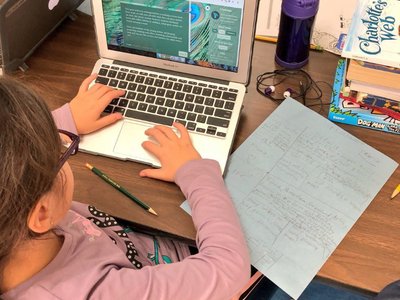
Night Zookeeper was designed to inspire a love of reading and writing in children, while at the same time helping to develop their creative thinking skills, as well as genuinely improving the quality of their writing.
Here are eleven awesome ways Night Zookeeper could do this for your child!
1. Creating animals
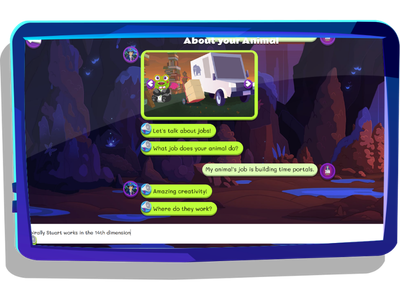
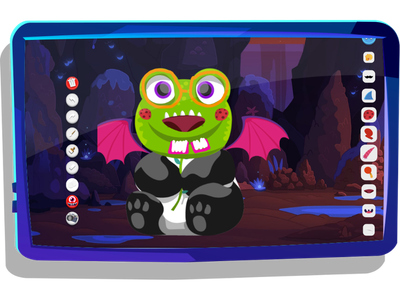
As a Night Zookeeper, one of your child’s most important tasks is create their own animals to live in their Night Zoo and Dens! This is the perfect chance for them to use their imaginations and creative writing skills to first, draw their animal, and then to write a report all about it.
They’ll be asked questions to help them write as much as they can about their creation and given writing goals to achieve in their animal report.
Writing about something they have created themselves gives them a fun reason to practice descriptive writing and explore their own creativity.
In the Night Zoo, the more imaginative the animal the better!
2. Building a zoo
The more your child explores Night Zookeeper, the more they can unlock and collect, giving them everything they need to build their very own Night Zoo filled with the unique animals they’ve created.
As they progress through Quests, they can build and customise Dens for their animals, choosing how they want their Zoo to look. The more they learn and achieve, the more they can unlock and customise - turning their progress into a fun, rewarding part of their Night Zookeeper adventure.
They can feed their animals, give them special abilities, and interact with them to power them up and unlock even more!
3. A super FUN curriculum
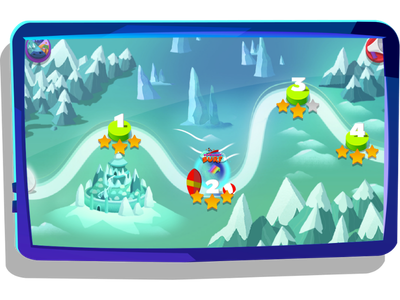
Night Zookeeper’s structured curriculum, Quests, takes children through age and ability appropriate reading and writing activities designed to build their skills step by step.
Each topic begins with a clear lesson that introduces the concept. Children then reinforce what they’ve learned through interactive challenges and educational games, giving them opportunities to practice their skills in different ways.
At the start of each topic, children can also create a brand new character to take along on their Quest. They can design their animal, give it a name, and bring it to life as they work through the activities.
As they progress through each topic and reach new milestones, children can unlock exciting rewards to use throughout the program, giving them even more motivation to keep learning and progressing.
Parents can also follow their child’s progress through the Parent Dashboard, exploring the topics they’ve completed, what they have yet to cover, the vocabulary they’re learning, and how they’ve performed in previous activities.
4. Interactive writing activities
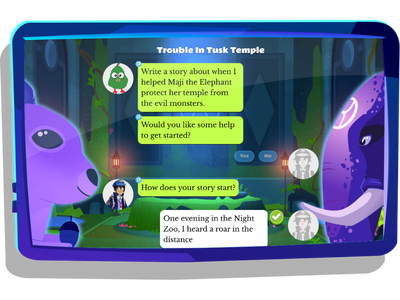
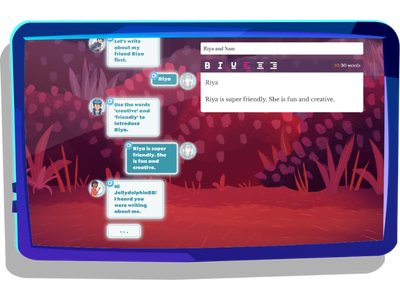
Children regularly take on writing challenges designed to help them practice different types of writing. The program has a large variety of long-form writing exercises, such as weekly writing contests, collaborative projects, and interactive writing prompts.
They might write a letter, story, poem, report while working towards age-appropriate goals. All writing activities are designed to boost writing confidence by encouraging and motivating young writers.
The program has a built-in spell checker, and you can change the spell check level from your parent dashboard.
5. Feedback
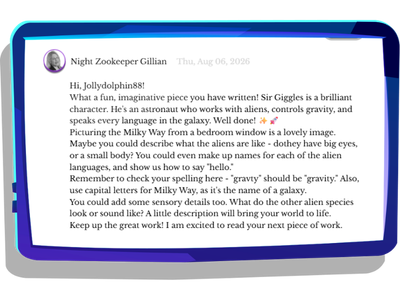
Children can receive personalised feedback from Night Zookeeper's qualified tutors on their writing.
Tutors may highlight spelling or punctuation, ask questions about their ideas, or suggest ways they could develop their writing further, always with positive encouragement.
This helps children understand how they can improve while giving them a reason to feel proud of the work they have created.
Children can also can leave feedback on other children’s writing, and there is a helpful comment suggestion tool to assist in thinking about how they should comment. This is a great way to help them improve each others writing skills and create a supportive community.
They can even follow their friends so that they can easily find new writing and leave encouraging comments to each other.
As a parent, you can also leave feedback on your child's writing from your parent dashboard.
There is no direct chat, and all comments are moderated and approved by our team of educators.
6. Skill-boosting games
Learning essential language skills doesn't have to mean just completing worksheets!
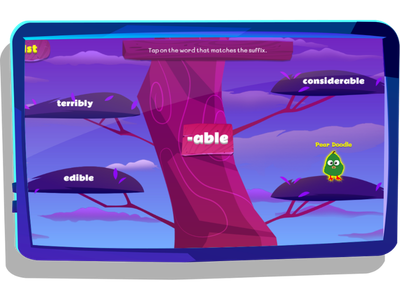
Night Zookeeper includes a variety of educational games and interactive challenges that help children practice spelling, vocabulary, grammar, sentence building, typing, and more.
The wide range of games give children plenty of opportunities to practice without it feeling repetitive.
The games are short with engaging graphics, making them perfect for reinforcing skills and making them really stick.
The more correct answers they get, the more points they acquire, and the more they can power up the animals they create.
7. Interactive lessons
Children have access to a library of interactive, video-based lesson series covering a wide range of reading and writing topics. Each lesson starts with a short video, followed by interactive multiple-choice questions that help children check their understanding and reinforce what they’ve learned.
Topics include report writing, opinion writing, poetry, storytelling, and so much more. At the end of each lesson, children are given a longer writing activity where they can put their new skills into practice.
Parents can also access 100+ additional interactive lessons from the Parent Dashboard. These can be assigned to your child when you’d like them to focus on a particular skill or topic, making it easy to tailor their learning to their needs.
There’s also a Suggest a Lesson feature, which allows you to upload a custom spelling list or suggest a specific topic, so your child can practise exactly what you’d like them to work on.
8. Weekly writing contest
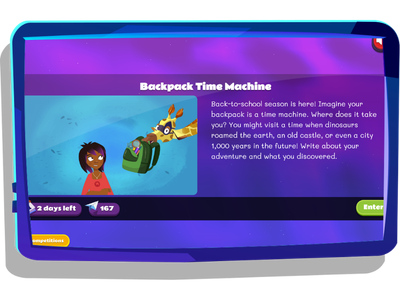
Our Star Writing contest gives children the chance to put their writing skills into action, follow a brand new weekly prompt, and win real prizes!
Each week’s prompt explores a different topic or writing style, encouraging children to get creative, use their imagination, and experiment with their writing.
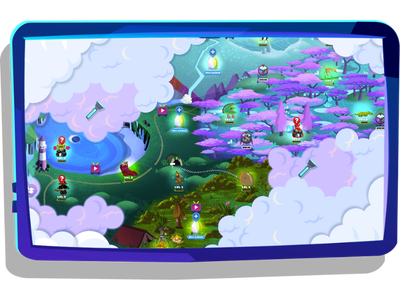
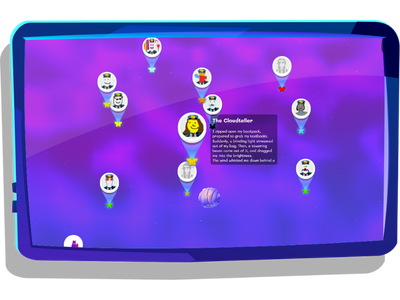
Once they’ve entered, children can explore other young writers’ entries and leave encouraging comments as they journey across an awesome interactive Star Map. They can also discover previous winners and see what other young writers have created.
We aim to choose 4-6 winners every week, and when a child wins, their achievement is celebrated across the entire program, giving them a special moment to feel proud of their writing!
9. Monthly awards
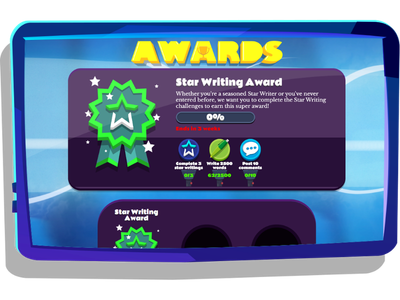
Each month, children have a brand-new award to work towards, giving them a fun reason to explore different parts of Night Zookeeper. Awards might challenge them to enter the weekly Star Writing contest, write poems, complete lessons, play educational games, or reach other milestones across the program.
Each award has a criteria to complete, with friendly reminders in their messages to help them stay on track.
Once they’ve completed all three criteria, they’ll earn an exclusive badge for their profile. Children can collect their badges over time, creating a special record of their achievements that they can proudly display.
10. Projects
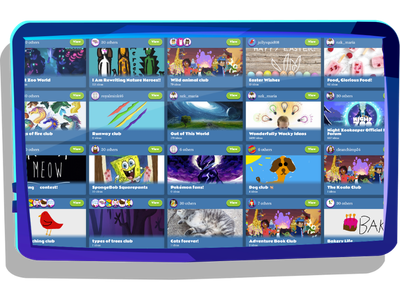
If your child is passionate about a particular subject, Projects give them a space to explore their interests through writing and drawing.
Children can join existing Projects or create their own around a topic they’re excited about. Each Project has an overarching theme with different subtopics to inspire ideas and encourage children to explore their interests in greater depth.
The Night Zookeeper team also creates new seasonal Projects each month, giving children fresh opportunities to get creative, share their work, and take part in activities alongside other young writers in the community.
11. Free printables
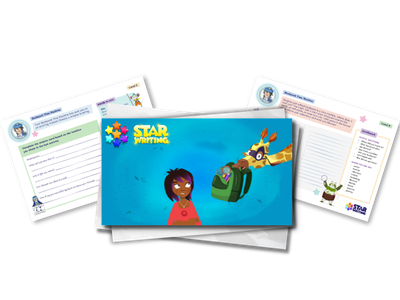
Each week, alongside the Star Writing contest prompt, children can download a free printable designed to help them explore the theme and develop their writing ideas.
With different difficulty levels available, the printables are suitable for children of different ages and abilities. They’re a fun way to combine online and offline writing practice, with bonus activities that help children develop their ideas and make the most of their writing skills.
From drawing and matching to creative writing activities, there’s plenty to keep children engaged while giving them the chance to practice their handwriting in an engaging and enjoyable way.
Night Zookeeper is packed full of these kinds of challenges, giving children fun, imaginative topics to express their artistic skills and creative writing ability with.
Sign up today and get a FREE 7-day trial!
Got any questions? Reach out to us at [email protected]. Follow us on social media for more tips, activities, and other freebies:


Make Reading & Writing Fantastically Fun!
- Award-winning reading & writing program for kids
- Improves spelling, grammar, punctuation & vocabulary
- Over 1,000 different learning games and activities


“My child hates writing.” What do I do?


25 Creative Writing Prompts for Kids


Why Is Reading Important For Children?