


10 Ways to Motivate Your Child to Write


Let’s face it. Some children are natural born storytellers with creativity and imagination spilling from their fingers. For them, exploring creative writing is just the beginning of a beautiful journey. However, for some children, getting them to want to write is a tedious and stressful task. While writing might not come naturally to every child, this does not mean that your child can’t eventually learn to really love creative writing!
Encouraging your child to develop their writing skills isn't just about helping them with their schoolwork. Writing is an important life skill that can benefit children in many different ways as they grow.
As children become more confident writers, they'll develop their ability to communicate clearly, organise their thoughts and express their feelings and opinions. Writing also supports creativity, critical thinking, problem-solving and attention to detail.
Strong writing skills can make a difference across different areas of education, too. From completing school assignments and answering questions to communicating ideas and exploring more complex topics, writing is a skill children will continue to use throughout their academic journey and into adulthood.
If you want your child to get in the right frame of mind to love creative writing, try these helpful tips!
1. Verbal Storytelling
Writing doesn't always start with pen, paper, keyboards and letters; it actually begins with an idea. Ask your child to tell you a story out loud. Encourage them to start telling you any kind of story, whether it's about their day or a three-headed magical creature!
Getting your child used to articulating their ideas out loud will help lay the foundations for better communication and eventually encourage them to capture their ideas on paper or a screen.
You can also turn verbal storytelling into a creative writing activity. Give your child an inspiring writing prompt, character or scenario and ask them to build a story around it. For example: "One morning, you wake up to discover that your pet can suddenly talk. What does it tell you?" You could even take turns adding sentences to the story, introducing new characters and unexpected twists along the way.
2, Drawing
At Night Zookeeper, we strongly believe that creative writing goes hand-in-hand with drawing. Many children articulate their thoughts differently, and one way to start telling a story is by drawing it!
You'll be amazed at how many children take to drawing their stories before ever learning how to write them. Remember, a simple drawing can turn into an entire adventure!
The next time your child draws something, ask them to tell you the story behind it.
You could encourage them to turn their drawings into a comic strip, adding speech bubbles, captions and descriptions to bring their characters to life. This is a great way to introduce writing in a visual and enjoyable way, particularly for children who find starting with a blank page challenging.

3. Reading
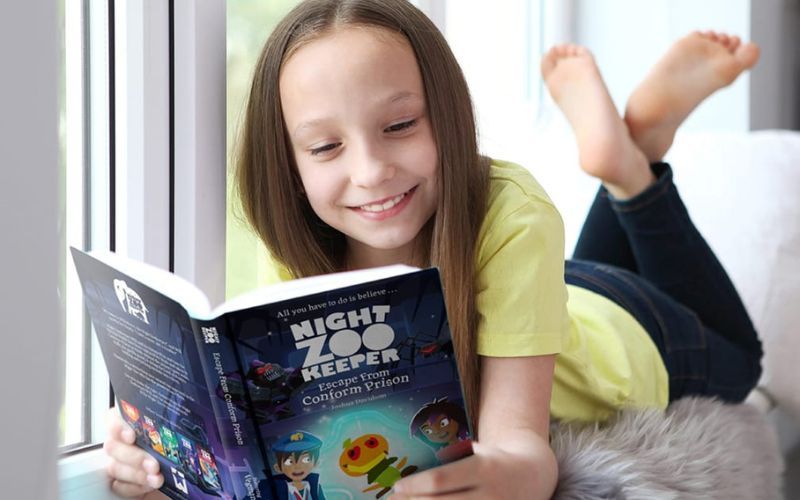
Whether you're reading to your child or they're reading independently, definitely encourage reading in order to encourage writing. The more your child gets absorbed in a story, the more they'll want to write themselves.
Also, as their reading skills develop, so will their ability to write.
Reading provides an important foundation for writing. It introduces children to new vocabulary, different writing styles, interesting characters and imaginative settings. These experiences can inspire their own stories and help them understand how to structure sentences and communicate ideas.
Try making reading a regular part of your family routine. You could read together before bedtime, visit your local library or encourage your child to choose books about topics they're passionate about. After finishing a story, ask them what they liked about it or what they think should happen next. You could even challenge them to write an alternative ending!
4. Alphabet Magnets and Poetry/Word Magnets
Rather than bringing your child to writing, we say bring the letters and words to your child!
Everyone remembers how much fun fridge magnets were as a child. You can encourage your child to arrange a new word on the fridge every day. You can even encourage them to make up a word, provided that they tell you a story about what it means.
If you use word magnets, you can encourage them to start writing sentences.
You could make this into a fun word-building challenge by choosing a random word and asking your child to think of as many related words as possible. Once they've built up their word collection, challenge them to use their favourite words in a funny sentence or short story.
5. Grocery Lists
If your child is having trouble writing long-form sentences and paragraphs, have them start with household items. You can get them used to grouping certain words together while also getting them involved in deciding which items make their way into the house!
If you have fridge magnets, they can even start writing what they want you to purchase on the fridge.
Everyday activities like this are also a great opportunity to show children how writing is used in real life. Let them help you write shopping lists, make notes, organise weekend plans or create reminders. Explain why you're writing things down and how it helps you communicate, stay organised and remember important information.
6. Diary Keeping
If your child is struggling to use their imagination to create new stories, perhaps they can start by writing down their own feelings and experiences in a diary.
Diary writing is a particularly safe space to encourage writing because it's private. Daily diary writing could encourage your child to start branching out and trying other types of writing.
You could also encourage your child to start a personal writing project, such as a daily discovery journal. Ask them to write down one interesting thing that happened each day, something new they learned or something that made them happy.
They could include drawings, photographs, stickers and colourful decorations to make their journal completely their own. Alternatively, they might enjoy creating a scrapbook, writing their own comic book or putting together a collection of short stories. Having a personal project to work towards gives children a sense of ownership over their writing and something special to look back on.
7. Be your own author!
So many children dream about having all kinds of amazing jobs when they grow up. Imagine the look on their faces when you tell them that they could be an author right now!
It's one of the few jobs that starts with a person taking their great ideas and writing them down.
Encourage your child to create their own book, complete with a title, illustrations and a story. They could even design their own front cover and share their finished masterpiece with family and friends.
You can help them get started by providing creative writing prompts or suggesting different story ideas. For example, ask them to imagine a world where animals can talk, a secret door that leads to another dimension or a character who discovers a mysterious superpower. The possibilities are endless!
8. Play Word Games
Some children are really motivated by games. Spend some quality time with your child playing word games together.
You can encourage your child to write by having them play simple word games like I Spy, Mad Libs, unscramble the word or find the word. The better they get at identifying the right words, the more confident they'll become when putting them into a story.
You can also introduce simple writing challenges to make these games even more exciting. For example, challenge your child to write a story using five randomly selected words, create the funniest sentence they can think of or write a short story in just five sentences. Adding a little friendly competition or a fun reward can help make writing practice feel like playtime!
9. Letter Writing
A fun family activity could be writing a good old-fashioned letter to a loved one.
You can both write it together, giving your child a chance to explore their feelings and practise gratitude, all while putting their thoughts into a letter!
You could also encourage your child to write birthday cards, thank-you notes or letters to their favourite characters. These activities help children understand that writing has a real purpose: it allows us to share our thoughts, communicate with others and express how we feel.
Remember that children often learn by watching the adults around them. Let them see you writing letters, making lists, sending messages or jotting down reminders. By modelling writing in everyday life, you can demonstrate that it's a useful skill that goes far beyond the classroom.
10. Online Programs
There are a variety of online programs to help kids enjoy learning, but only one focused on creative writing - Night Zookeeper! At Night Zookeeper, we’ve created a fun-to-use accessible writing program for kids that encourages them to love creative writing. From drawing and writing about magical animals, to playing word games and competing in writing competitions, Night Zookeeper offers children the chance to explore their potential and get better at creative writing!

Try out these helpful tactics to encourage your child to want to write. Do you have something to add to this list? Please let us know by reaching out to [email protected], or share with us on our social media:


Make Reading & Writing Fantastically Fun!
- Award-winning reading & writing program for kids
- Improves spelling, grammar, punctuation & vocabulary
- Over 1,000 different learning games and activities


“My child hates writing.” What do I do?


How to Write a Summary


25 Creative Writing Prompts for Kids


